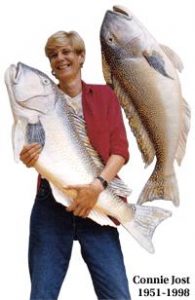
In memory of Citizens United member, artist and art educator, Connie Jost, the Citizens United Board of Trustees has established a scholarship fund in the amount of $500-1000 for an artist-student who will be attending a college or school of art. The applicant must be a senior in high school in Cumberland County, NJ and have a recommendation from his or her art teacher. Ideally the applicant's artwork should demonstrate a respect and concern for the open space or unique environment of our county. This can be demonstrated in a variety of ways.

The applicant's submission should include:

  1. A portfolio or examples of artwork (up to 6 pieces)
  2. A personal statement of art and concern for nature (maximum 1 page - example 2006 essay)
  3. An admission to an art school or college (if applicant has been notified)
  4. A copy of high school academic record
  5. A recommendation of art teacher (maximum of 1 page)

Citizens United members are involved in a wide variety of projects and activities that cover all aspects of watershed protection. Citizens United is committed to the mission of preservation and protection and focuses its activities on achieving these goals. The officers and trustees of Citizens United recognize the powerful advocacy role art plays in preserving our natural heritage. The appreciation of the aesthetic values of our surroundings has always contributed to their stewardship. NJN and Citizens United have co-produced a movie documentary short entitled Constance Jost 1951-1998. It is a wonderful salute to Connie Jost in which artist Tricia Dufford, Director of the Jost Scholarship gives insight into artist's motivations. The documentary includes actual footage of Connie Jost.

    Applications are received between March 1- March 31 of the student's senior year of high school.

    Scholarships are distributed after the completion of the first semester of college.

Applications are available through high school art teachers or by contacting Tricia Dufford, Citizens United, PO Box 474, Millville, NJ 08332. The application deadline is March 31 each year. Anyone who wishes to donate money toward the Connie Jost Memorial Art Scholarship Fund can do so simply by sending a check written to Citizens United marked "Jost Scholarship."

Click here for previous scholarship recipients and a gallery of their works.

Constance (Connie) Jost:
Special Artist and Teacher

Constance Jost was a well-known South Jersey artist whose works incorporated fish and other marine creatures. A resident of Port Elizabeth, Cumberland County for 15 years prior to her demise on January 9, 1998, Connie was a 1969 graduate of Vineland High School, a 1973 graduate of Montclair State College, and an apprentice with Jersey City artist Patsy Novell. She received her master's degree in fine arts from Goddard University in Los Angeles.

Connie taught in several schools throughout the New Jersey Bayshore area, and was always enthusiastic, humorous, imaginative, and an inspiration to her students.

Ms. Jost's career was clearly influenced by her parents; her mother was an artist and her father a carpenter and fisherman. In a typical example of her word play, she commented in a 1992 interview, "I like to say my artistic license and my fishing license are the same."

Connie was a sculptor and a painter who used molds of fish and other marine life found in southern New Jersey to create latex replicas that she then painted as accurately as possible. These replicas were incorporated into sculptures and relief paintings.

Widely displayed, and appearing in exhibits at the Rosenfeld's and Muse galleries in Philadelphia, Connie's works were often described as whimsical and comical. The titles frequently involved puns: Flukes of Nature, Infant Tile, or Migraine Haddock. Many times the message was more political or environmental. Stars in Snipes depicted the American flag as a net of abundance, while at the same time challenging the viewer to question the practice of over-fishing and the resulting depletion of a vital resource.

Ms. Jost's works on public display include the relief paintings Airloom for an Ocean Floor in the Cape May County Court House and Another Salmon Chanted Evening in the headquarters of the Montana Fish, Wildlife & Parks in Kalispell, Montana.

In a 1988 article about an exhibit at Rosenfeld's, an Inquirer reviewer called her work an "attempt to examine the undersea world by a process that calls to mind the conflict between natural forces and man's need to control them."

In 1993, the State of New Jersey purchased Shellife for display in the Marine Studies Center of Rutgers University in New Brunswick. The 20-by-13-foot fiberglass sculpture addresses the ecological concerns created by the human destruction of the ecosystems along the continental shelf.

Connie's untimely death was caused by cancer, the environmental illness of our time. Ironically, her life's work depicted her concern for degraded ocean habitat and her death served as a sentinel of the degraded nature of our own habitat.

Connie was an innovative teacher with boundless energy who donated time to the Bayshore Discovery Project and other endeavors which she viewed as making a contribution to the marine environment. The Schooner Project regularly consulted with Connie for her innovative ideas, and they have provided us with a list of miscellaneous activities that Connie submitted to them. These activities were typical of her ability to go beyond the confines of conventional thought that restrict many people's creativity. Connie had a talent for tapping into kids' natural curiosity. The sketchy nature of the list, which is in the form of rough notes, forces the reader to become more imaginative in interpreting what Connie may have intended. Teachers may be able to build a lesson plan around any of these activities. We hope that by implementing these activities Connie's teaching spirit may live on, just as her artistic spirit survives in her work.

Ideas and Miscellaneous Activities submitted to the Bayshore Discovery Project by Constance Jost

Historically, early sailing, fishing, etc. were recorded by drawings. They were often farfetched.
. . . . .

Have some kids describe in writing without naming a creature. (Give them a picture to start the activity.)
. . . . .

Years before it was faddish, I found a book on NAUTICAL KNOTTING. We learned it, the kids loved it , and it turned out to be the basics of MACRAMÉ. Sailors made key rings and bracelets. Most were real boating knots.
. . . . .

Sun Prints
. . . . .

MAKE A MAP using only natural landmarks that they see on the cruise (or on a class trip, or in the school yard.)
. . . . .

Any chance of making something to PEOPLE scale like an oyster... and trying to open it the way a starfish does?
. . . . .

SCRIMSHAW: What do sailors do without TV? Give out plaster tiles.. engrave with pencil-like implementation... wax, then shoe polish engraving. Don't know if it would work... but something similar might.
. . . . .

Check out a new book by a woman who spent time living in LEWES, DELAWARE. She recorded stories about sea life and the bay... don't know the name, but it's supposed to be great and you may get ideas. [Notes from the Shore, by Jennifer Ackerman]
. . . . .

I was surprised to learn a friend goes everywhere in the world from his backyard on the Tuckahoe River. Chart a way to anyplace using the rivers as highways. We've forgotten how to look at it that way.
. . . . .

EXOTIC AQUATICS is the term used for all things that now live in the waters that are not indigenous to the area. Phragmites, certain worms carried on boats, zebra mussels, oyster diseases.
. . . . .

Products inspired or made from local sea creatures: eg. Barnacles inspired super glue. Make up more.
. . . . .

ARTWORK AND CRAFTS: made from sea creatures, local and historical: jewelry, mother-of-pearl, driftwood. Make something. Tumble some oyster pieces?
. . . . .

Could some kind of "Where's Waldo" mural of the Bay be made? Or a collage that each student could add to?