Cirsium discolor
  |
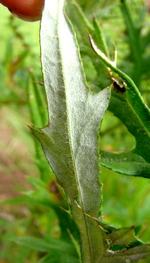 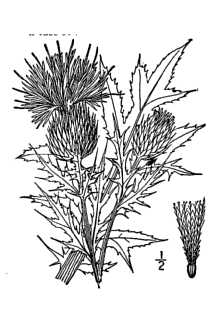 |
Photo courtesy Renee Brecht |
Britton & Brown |
| Botanical name: | Cirsium discolor (Muhl. ex Willd.) Spreng. |
| Common name: | field thistle |
| Group: | dicot |
| Family: | Asteraceae |
| Growth type: | forb/herb |
| Duration: | biennial; perennial |
| Origin: | native |
| Plant height: | 3 - 7' |
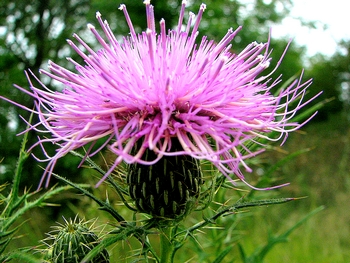
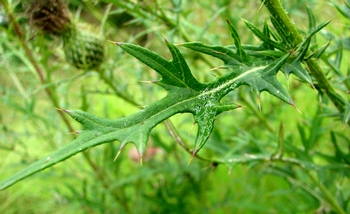
| Foliage: | prickly, deeply lobed, undersides covered with white felt |
| Flower: | large heads, pink to purple, to 2" across |
| Flowering time: | mid-August to late September, occasionally into October |
| Habitat: | fields and roadsides |
| Range in New Jersey: | statewide |
| Heritage ranking, if any: | n/a |
| Distribution: | 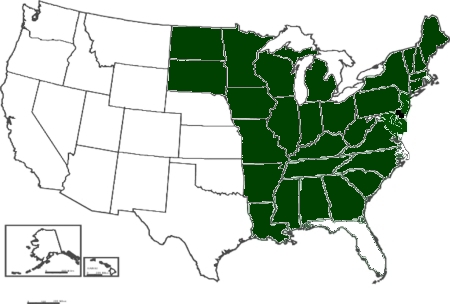 |
| Misc. | The white underside of the leaves
distinguishes this plant from the non-native Cirsium
vulgare; also
the bracts subtending the flowerheads have only fine spines or no
spines, as opposed to numerous spines on C. vulgare. Insect pollinated by bumblebees, and butterflies such as monarchs, fritillaries, painted ladies, swallowtails, sulphers, and sphinx moths. It is larval food for painted ladies. The seeds are eaten by goldfinches, and the hair on the underside of the leaf is used as nest lining material. Ruby throated hummingbird will also drink its nectar. Illinois wildflowers |