Itea virginica
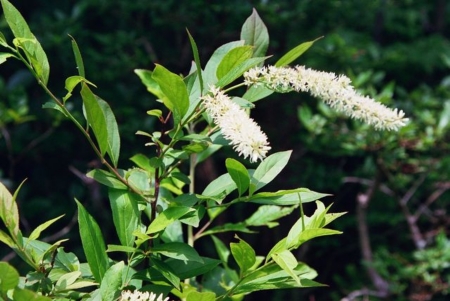 |
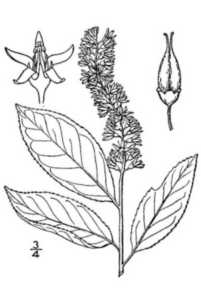 |
Wiki Commons, GNU |
Britton & Brown |
| Botanical name: | Itea virginica |
| Common name: | Virginia sweetspire or Virginia willow |
| Group: | dicot |
| Family: | Grossulariaceae |
| Growth type: | shrub |
| Duration: | perennial |
| Origin: | native |
| Plant height: | 3 - 6' |
| Foliage: | Alternate leaf arrangement; leaves
elliptical to lanceolate with an acute apex, 1.5 to 4" long, and 3/4"
to 1-1/4" wide. Leaf margins very finely serrated (toothed); medium to
dark green leaf color, and leaf surface is glabrous (smooth, without
hairs). Mahogany to orange red fall foliage. Deciduous to
semi-evergreen. Stems are purple red on the sun-exposed side and green on the opposite side. Twigs have green, chambered pith; 3 bundle-scars (monkey- face). |
| Flower: | white, lightly fragrant 2" to 6" long racemes of small white flowers |
| Flowering time: | Flowers early June to late June; fruits about September, persisting over the winter. |
| Habitat: | Pine barrens swamps, streambanks and other moist habitats. |
| Range in New Jersey: | Frequent in Pine Barrens swamps and locally in West Jersey and the Cape May peninsula. Itea virginica is at its northern most range in New Jersey. |
| Heritage ranking, if any: | n/a |
| Distribution: | 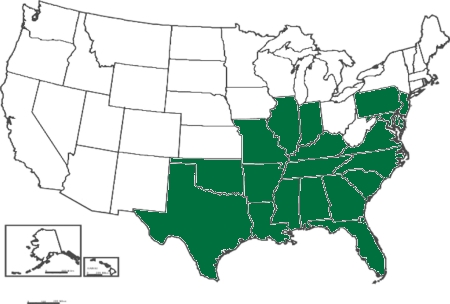 |
| Misc. | USDA
lists as an obligate wetland plant; occurs almost always (estimated
probability 99%) under natural conditions in wetlands. May be confused with Clethra alnifolia (Sweet pepperbush). Used in landscaping; flowers attracts butterflies; seeds eaten by birds. Several cultivars exist. Itea, Greek for willow, and virginica, of Virginia. |